
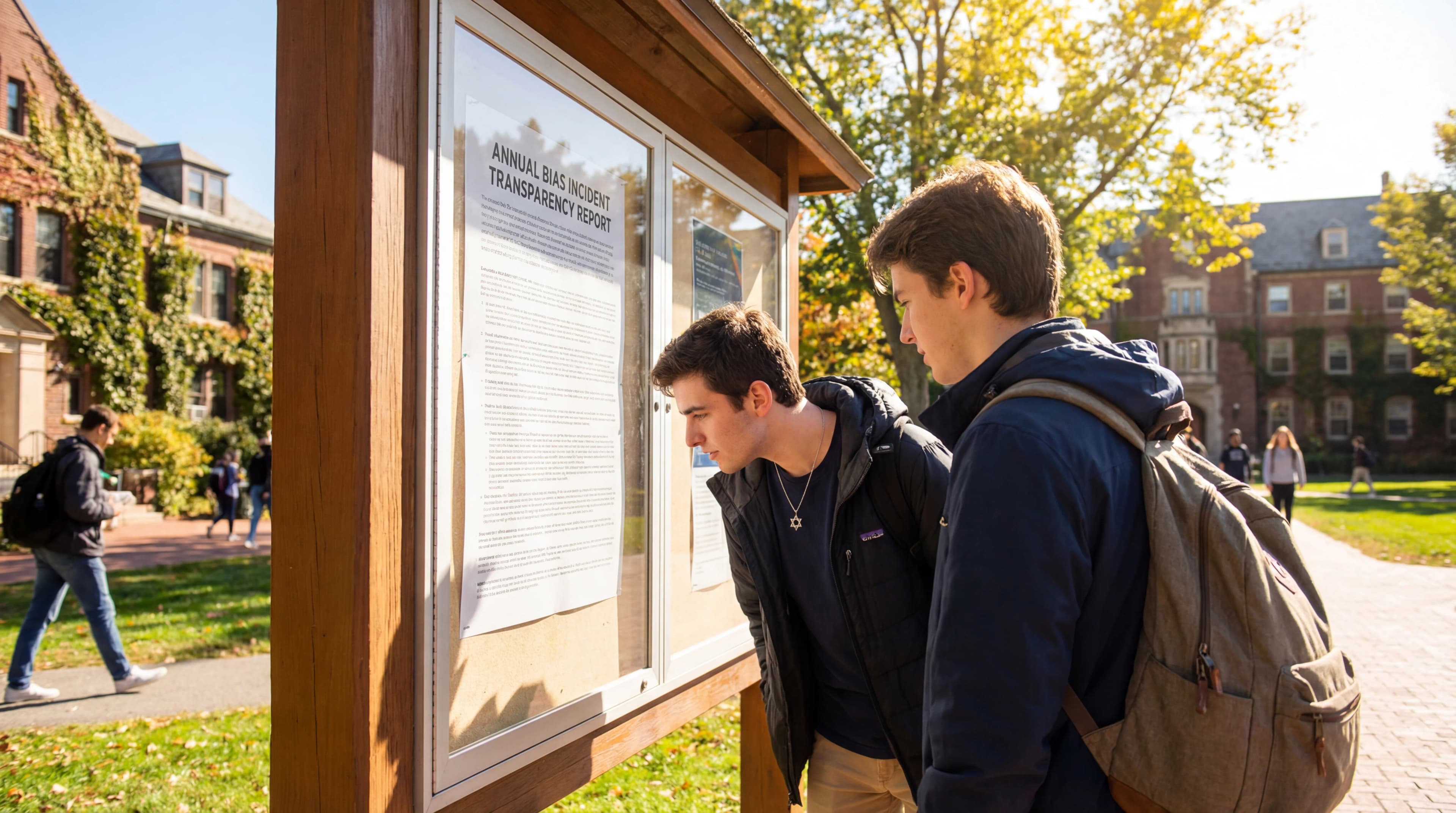
Many colleges do not clearly report antisemitic and other bias incidents, or how they respond. This cause pushes schools that receive federal funds to publicly share consistent data on complaints and outcomes. Winning looks like simple, public reporting that helps students, families, and leaders see problems early and track whether campuses act.
Why this matters now
When hate or discrimination is hidden, students don’t know what is happening around them or whether the school is responding. That can make targeted students feel unsafe and unsupported, and it can erode trust across campus.
Public reporting also creates accountability. Trustees, alumni, policymakers, and prospective students can’t judge campus climate—or leadership decisions—without clear information about incidents and resolutions.
