
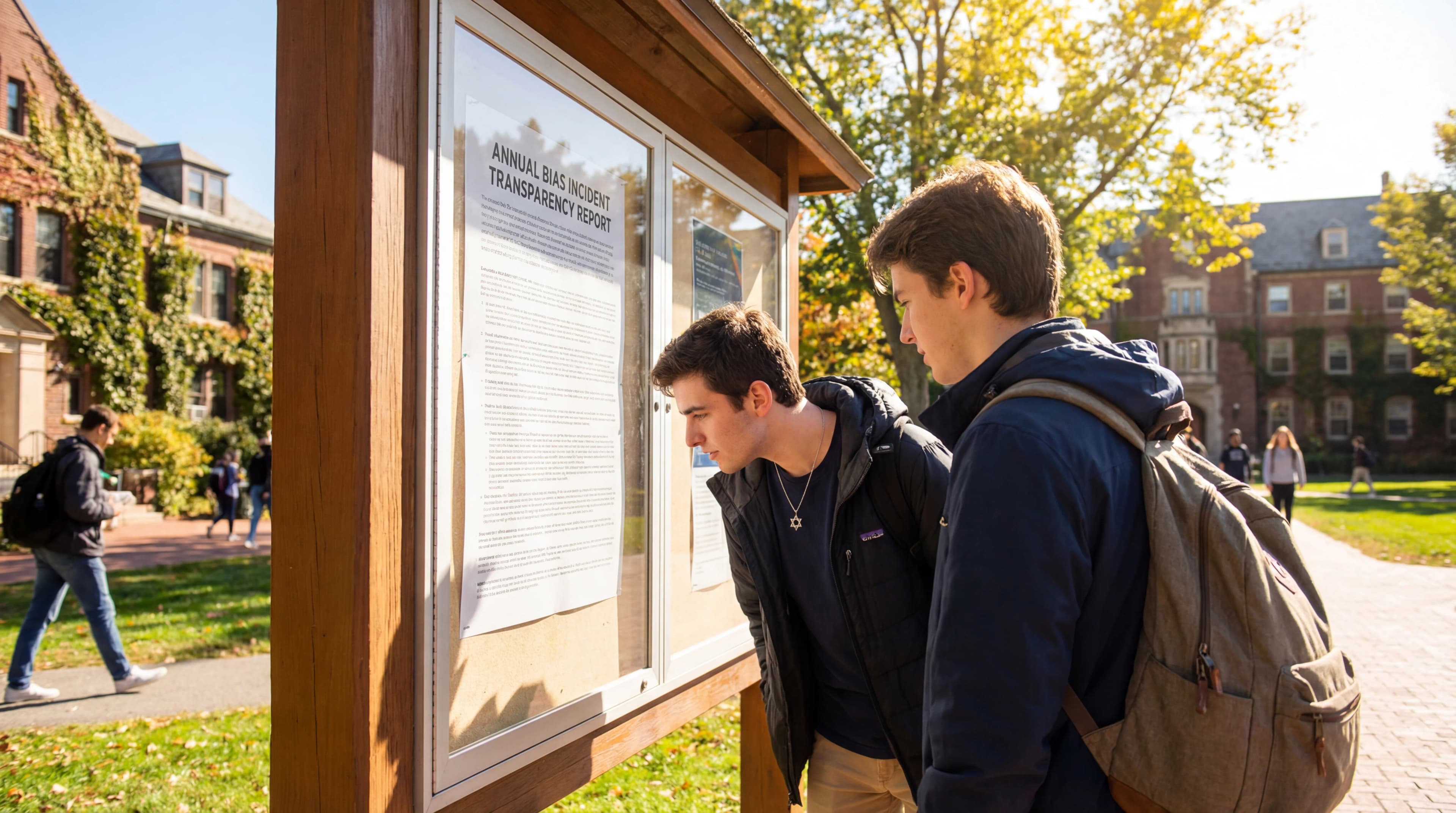

Encourage students and alumni to demand transparency through advocacy and possibly leverage (like alumni threatening to withhold donations until the school p...
Build campus-level pressure that makes transparency the default by organizing students and alumni to demand public reporting and clear complaint pathways. Use specific, implementable asks—like a public incident dashboard and regular updates on complaints and outcomes—while avoiding broad surveillance. This can move faster than legislation, but results vary by campus culture and require sustained follow-through.
Why this works
- Direct stakeholder pressure often prompts faster action than bureaucratic routes.
- If a college’s own community calls for a public hate incident dashboard or regular updates, administrations may implement it to demonstrate responsiveness and avoid reputational harm.
- For instance, after controversies, some college presidents held town halls and promised better communication.
The Leadership Conference on Civil and Human Rights
AdvocacyCoalition driving civil rights progress
Founded in 1950, The Leadership Conference on Civil and Human Rights is a historic coalition of over 200 national organizations committed to social justice and civil rights. It serves as the lobbying and coordinating arm of the civil rights movement, fighting for federal policies to eliminate discrimination and expand opportunity:. The Leadership Conference has led advocacy for landmark laws—from the Civil Rights Act to the Voting Rights Act—and today pushes to restore Title VI disparate impact protections, combat hate crimes, and address systemic inequality through unified, strategic advocacy.
Mechanism
About GrassrootsHow The Leadership Conference on Civil and Human Rights uses funding
- Convene student groups and alumni networks to align on transparency demands and a reporting format.
- Press campus leadership for a public dashboard or annual report covering complaints, resolutions, and outcomes.
- Push for clear homepage links and guidance on OCR complaint processes.
- Use town halls and trustee engagement to sustain pressure and monitor follow-through.
- Coordinate with civil-rights partners to align asks with Title VI compliance and privacy constraints.
- Maintain follow-up so commitments become published data, not one-off promises.
Milestones
Checkpoints and the expected timing for each step
- 1
Coalition and template built
Near termShared asks and reporting format are finalized.
- 2
Leadership engagement secured
Near termMeetings and commitments are documented.
- 3
First public report published
After commitmentDashboard or annual report goes live.
- 4
Cadence sustained
OngoingRegular updates continue beyond the initial cycle.