
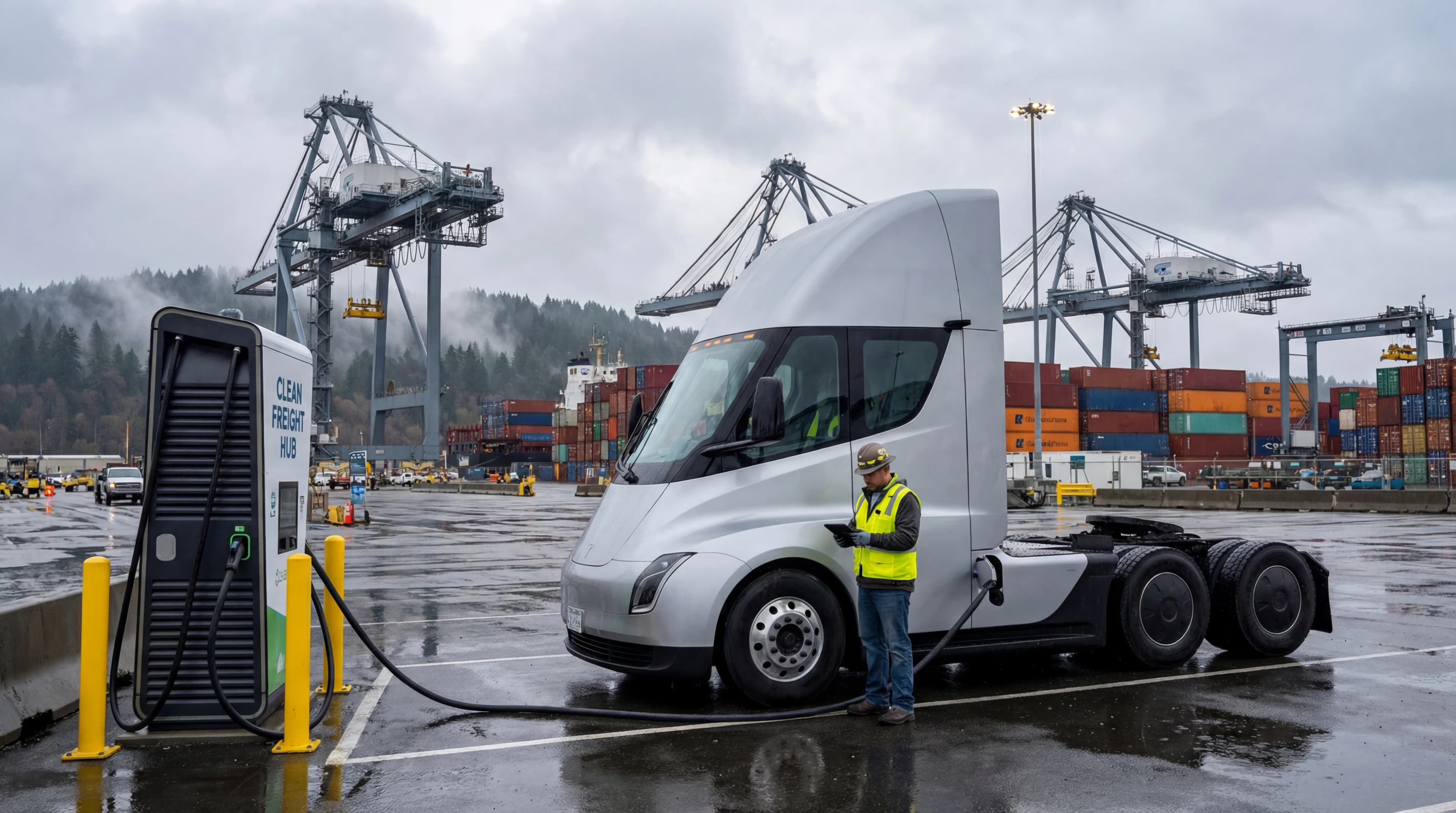

“Control what we can control” – turbocharge state programs so that by the time enforcement kicks in, compliance is easier.
Use the enforcement pause to speed up the practical work that makes clean trucks feasible: grants, charging buildout, utility coordination, and program delivery. Fund policy and implementation support that helps Washington deploy its $160M investment quickly—especially for smaller fleets—so compliance is easier when enforcement resumes.
Why this works
- By using the current pause to build EV truck charging stations, train workforce, and get early adopters on board, Washington can remove practical barriers.
- The state’s huge $160M investment is a strong start – making sure that money swiftly gets to fleet operators to buy electric trucks will create success stories.
- If small trucking firms see peers benefiting from fuel and maintenance savings, opposition softens.
- This strategy also includes expanding partnerships: e.g.
- working with utilities to ensure depot charging gets fast-tracked, and possibly using the Climate Commitment Act revenue annually to fund rebates for zero-emission trucks (making sticker prices comparable to diesel).
National Committee to Preserve Social Security and Medicare
AdvocacyProtecting and enhancing retirement and health security for seniors
Mechanism
About LobbyingHow National Committee to Preserve Social Security and Medicare uses funding
- Identify the biggest implementation bottlenecks (charging, permitting, truck availability, financing) and prioritize fixes.
- Work with agencies to speed grant and rebate timelines and simplify applications for small operators.
- Coordinate with utilities and regulators to fast-track depot charging approvals and interconnection.
- Recruit early adopters and surface proof points that reduce opposition.
- Create a feedback loop so programs adjust based on deployment results.
Milestones
Checkpoints and the expected timing for each step
- 1
Bottlenecks mapped + program plan set
0–30 daysTop barriers are prioritized with owners and a delivery timeline is published.
- 2
Grant and rebate process streamlined
1–2 monthsSimplified application guidance and predictable timelines are released for fleets.
- 3
Charging fast-track pipeline launched
2–4 monthsUtility and permitting playbook is live and a first cohort of depot projects is moving.
- 4
Early adopter proof points published
3–6 monthsPublic case studies show deployments, lessons learned, and assistance pathways.