
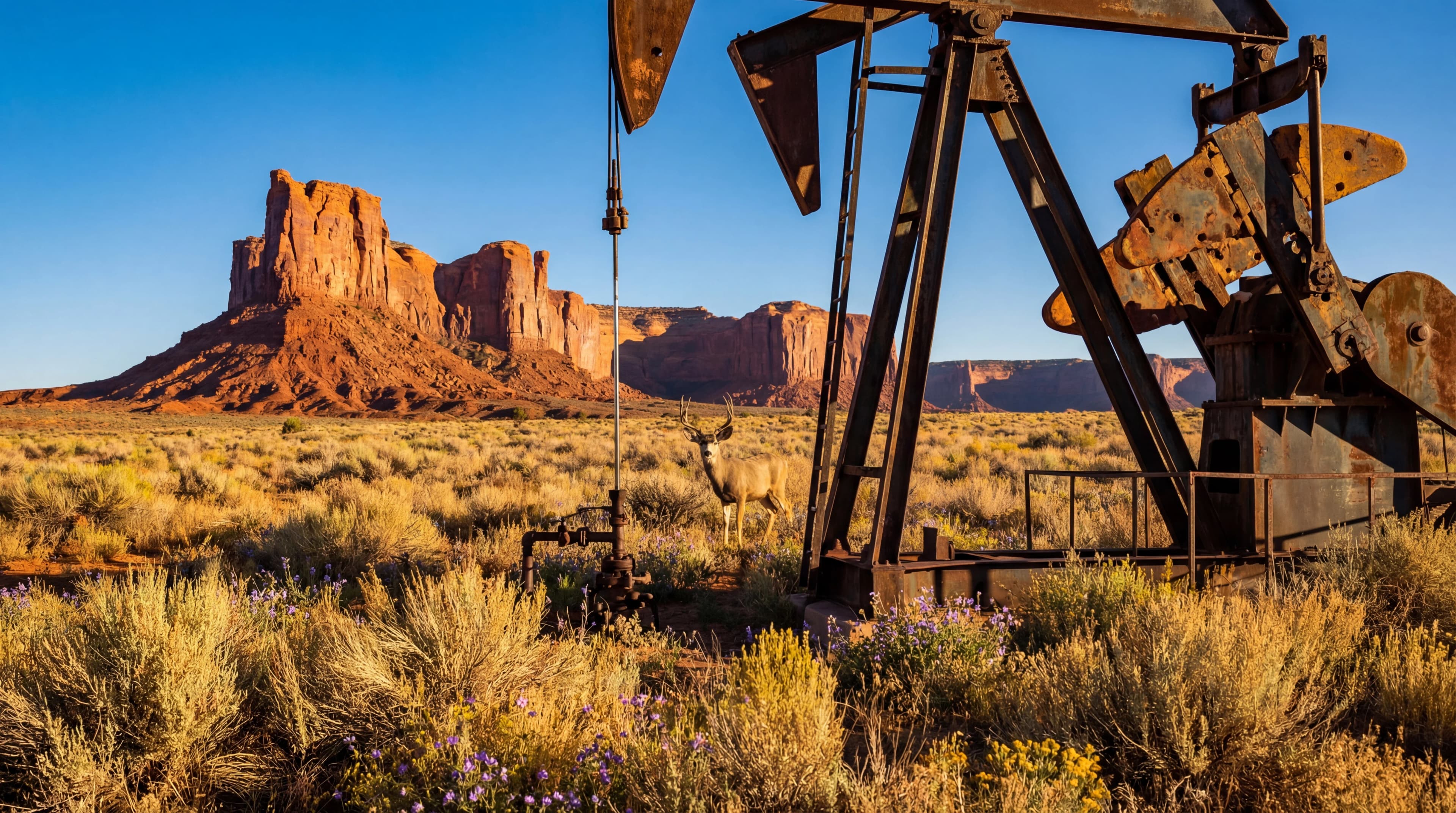
Oil and gas leasing on Bureau of Land Management (BLM) lands can put wildlife habitat, clean water, and culturally important places at risk. This cause focuses on keeping new oil and gas leases out of the most sensitive BLM areas and defending conservation-focused land plans from being overturned. Winning means conservation plans stay in force and sensitive areas avoid new leasing.
Why this matters now
BLM lands are used for many things: wildlife, recreation, grazing, and energy development. When oil and gas leasing moves into sensitive places, it can fragment habitat, pollute air and water, and industrialize culturally important sites.
Communities closest to the drilling often feel impacts first. Rural residents and Tribal communities can face more air pollution, water risks, and disruption to sacred landscapes. Damage to these lands can also reduce long-term local options like tourism and outdoor recreation, while climate pollution from fossil fuels can worsen drought and wildfires.
